AI is changing filmmaking. Human authorship still sets the line.
AI is moving from experiments into real production workflows. At the same time, unions, studios, filmmakers and regulators are defining where the technology belongs and what must remain protected.
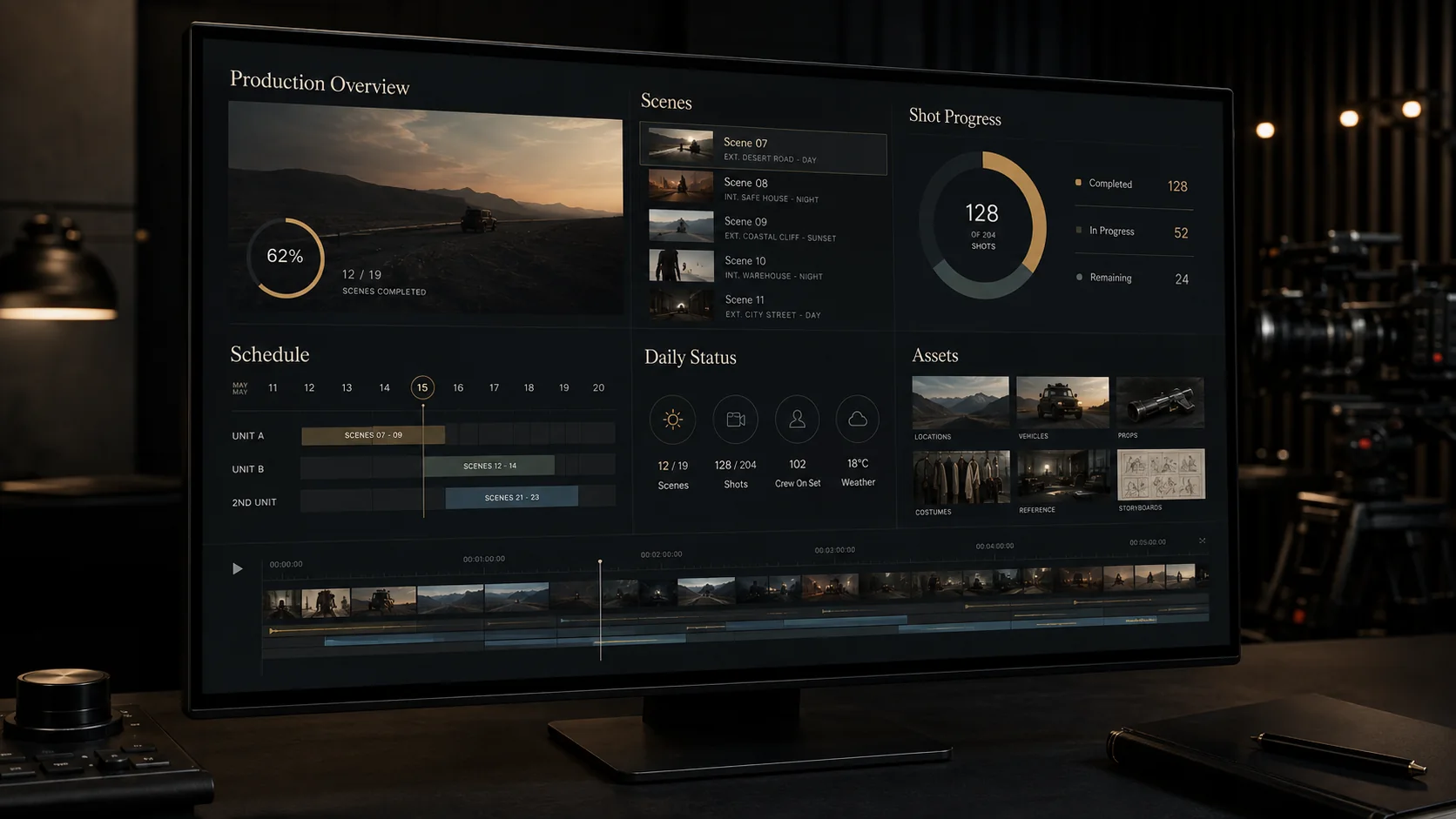
The film industry is no longer debating whether artificial intelligence will enter production. It is already present in development, storyboarding, previsualisation, image processing, post-production and the organisation of increasingly complex workflows.
The more important debate is about purpose. AI can remove repetitive work, make information easier to understand and give filmmakers new ways to explore an idea. It can also be used to imitate creative labour, reproduce a performer or obscure how an image was made. The same technical capability can support authorship or weaken it, depending on the rules around its use.
From experiment to production workflow
Lionsgate and Runway announced their first partnership in 2024. When they expanded it in June 2026, Runway said its tools were being used across previsualisation, storyboarding and final-frame production. The new agreement also included a joint programme to develop and produce new intellectual property.
In Denmark, the filmtech conference PICTURE THIS devoted its 2025 programme to moving beyond generative hype. Organised by the Danish Film School and supported by the Nordisk Film Foundation, the programme examined practical uses of new technology across development, production and post-production.
These examples point to a wider change. AI is becoming less useful as a spectacle and more useful as a layer inside existing creative and operational processes. Its value increasingly depends on whether it fits the work of writers, performers, directors, designers, editors and production teams.
The labour question is not theoretical
The Writers Guild of America’s 2026 agreement preserved the AI protections negotiated in 2023 and added notice requirements when companies license writers’ scripts, or projects based on those scripts, to train commercial generative systems. The Guild can request discussions about such licensing, including remuneration.
SAG-AFTRA members ratified a new television and theatrical agreement in June 2026 that built on earlier digital-replica protections and further restricted the use of synthetic performers. The direction is clear: consent, compensation, disclosure and protection against replacement are becoming part of the production framework rather than optional ethical statements.
This does not mean rejecting technology. It means recognising that a face, voice, screenplay or performance is not simply raw material. Film is made through human contribution, and the rules governing AI must be capable of recognising that contribution.
Awards and regulation are focusing on authorship
For the 98th Academy Awards, the Academy stated that generative AI and other digital tools neither improve nor damage a film’s chances of nomination. The relevant consideration is the degree to which a human remains at the centre of the creative authorship.
Europe is also moving from broad principles to concrete obligations. Article 50 of the EU AI Act applies from 2 August 2026. The European Commission’s guidance describes transparency requirements for interactive AI and synthetic content, including machine-readable marking of generated or manipulated material and disclosure when people are exposed to deepfakes.
Together, these developments suggest that the defining question will not be whether a film used AI. It will be how the tool was used, whether people gave meaningful consent and whether the final work still represents human creative responsibility.
Where Northstar believes the technology belongs
Northstar’s interest is not in replacing writers, actors, directors or departments. It is in reducing the administrative friction surrounding their work. Script information, scheduling changes, production reports, assets and decisions should become easier to connect and understand.
AI can help structure a screenplay, compare versions, surface a conflict, organise production knowledge or prepare information for human review. Those uses are valuable because they create more room for rehearsal, performance, visual thinking and decision-making under pressure.
The standard should remain simple. If the technology makes the system more visible than the film, it has failed. Technology belongs behind the scenes. The film belongs in front.
The test ahead
The strongest film technology will not be the tool that generates the most impressive isolated image. It will be the system that filmmakers trust during the difficult, collaborative and deeply human process of making a complete work.
That trust will depend on authorship, consent, transparency and measurable usefulness. AI is changing filmmaking. The industry now has to decide what kind of filmmaking it wants the technology to serve.
Sources and further reading
- Writers Guild of America, 2026Summary of the 2026 WGA Minimum Basic Agreement↗
- SAG-AFTRA, updated 2026Artificial Intelligence resource and agreement timeline↗
- Academy of Motion Picture Arts and Sciences, 21 April 2025Awards rules approved for the 98th Oscars↗
- Runway, 11 June 2026Runway and Lionsgate expand partnership↗
- Filmværksted Danmark and the Danish Film School, 2025PICTURE THIS 25: Beyond the Generative Hype↗
- European Commission, updated 6 August 2026Guidelines on AI transparency obligations↗